SEPARATELYTOGETHER

SEPARATELYTOGETHER letters, numbers, punctuation and other signs, 2018

public space installation
ink-jet print on vinyl
1486×1738 cm

The work exhibited as the second edition of the Yanköşe public art project on Meclis-i Mebusan Street, Kabataş, Istanbul presents the most recent version of the text of the Constitution of the Republic of Turkey, in a large format pattern. All of the elements that make up the Constitution desert the sentences and paragraphs they belong to, in order to meet other elements similar to them, and the lines they form transform into straight lines that intersect but extend out along different axes to compose an abstract, chaotic view. In this way, these elements, which contain the potentiality of the text of the constitution, are emancipated in a sense, and open a door for sentences that have not yet been formed. The work focuses on the Constitution, and encourages thought on the possibility of individuals from a certain land to live together, not despite their differences, but with their differences.

Installation view; Yanköşe, Meclis-i Mebusan Caddesi,
Kabataş, Istanbul
photos: Flufoto, Istanbul

Where am I? As if in a dream… Did we arrive?

Where am I? As if in a dream… Did we arrive?

2016–18 concrete sculpture (permanent installation)
100x285x950 cm

A permanent public space project realized for the city of Rüsselsheim, the sculpture comprises three parts: the migration route of a Syrian woman to Europe, writings and the sitting area. The curved form of the sculpture represents the stages of the Balkan route from Syria to Europe. Writing based on an interview with a Syrian woman who traversel this route, concentrates on the common feelings having had and questions being asked at the very moment arrival: “Where am I?” is the first question asked when trying to understand the people, their behaviors and the structure of the local society, to position yourself in
this structure. “As if in a dream…” expresses the range of feelings from ambiguity to success. After all of the struggles, the migrant physically reaches his/her new home to start a new life. However, in his/her mind there are still questions: is it true? have I really arrived? “Did we arrive?” is a question asked to the society living in the country of arrival. The project combines the route and the writing with a large sitting platform. Sitting, as an activity, associates with settlement and settlement is about becoming local to a place.

Installation view; Kunstpfads am Mainvorland, Rüsselsheim
photos 1-4, 11-19: Günyol&Kunt
5-10: Stangl AG


TRITON

TRITON, 2018

installation boat remains
240 pieces, 4.5×632 cm

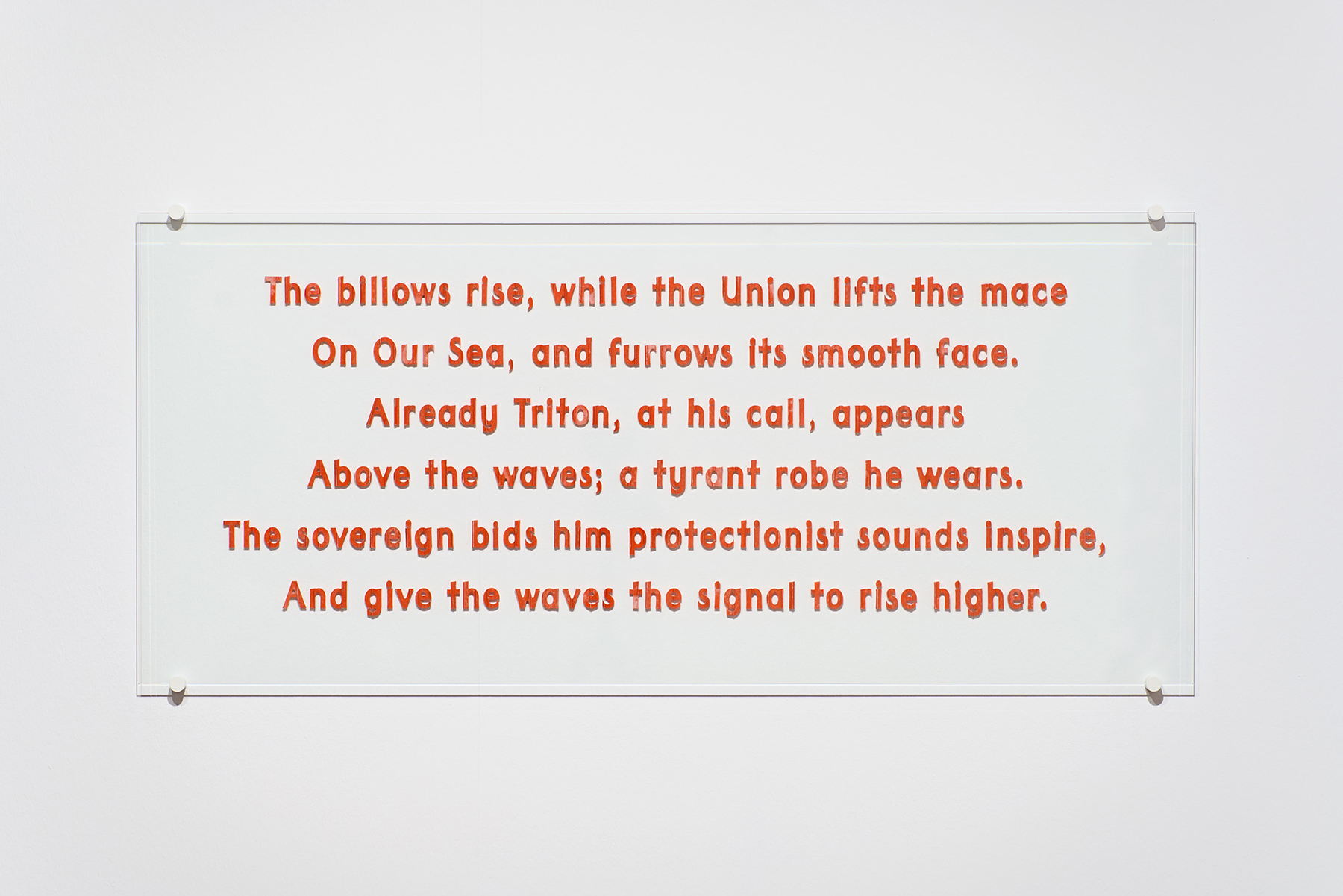
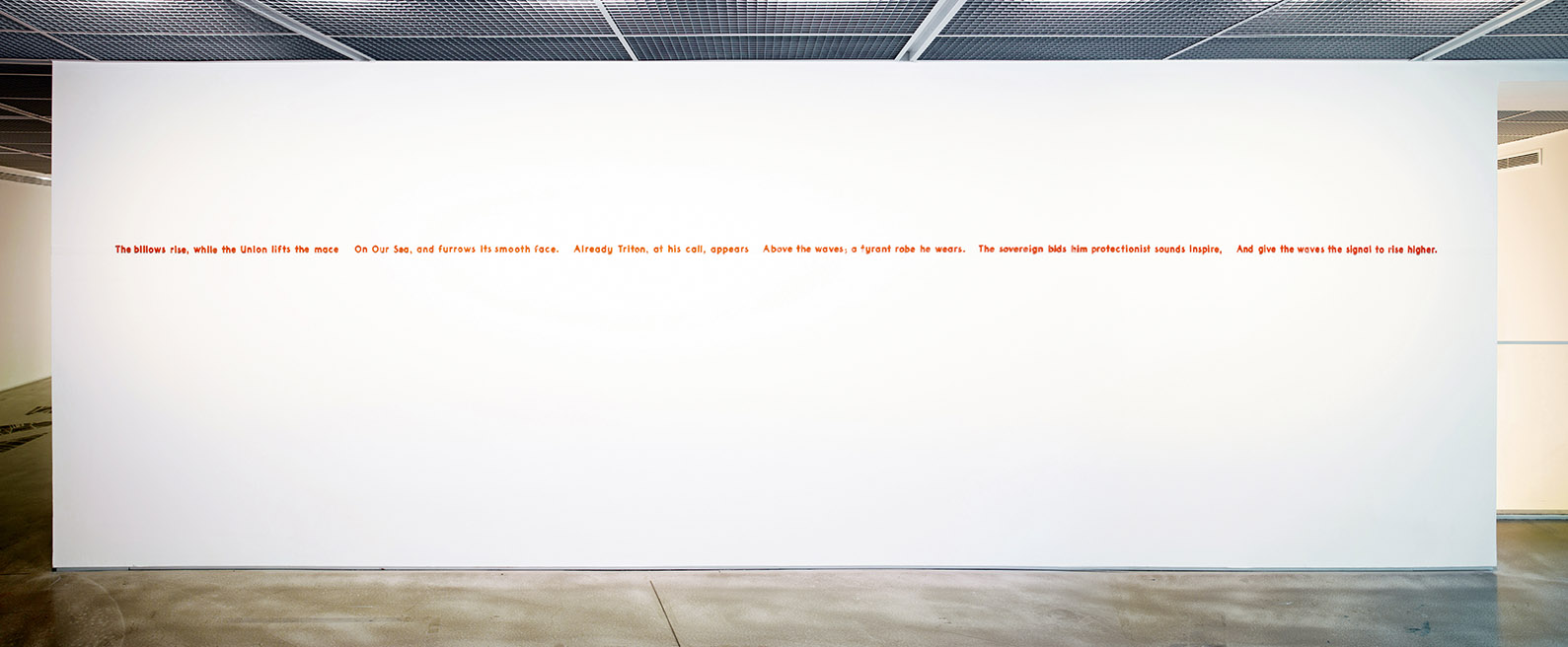
Triton is a mythological Greek god, the messenger of the sea. His special attribute was a twisted conch shell, which he blew like a trumpet to calm or raise the waves. Triton is also a border security operation conducted by Frontex, the European Union’s border security agency. It was undertaken after Italy ended the search and rescue operation; Mare Nostrum. The project TRITON rewrites a part of Ovid’s Metamorphoses with the pieces belonging to a refugee boat, which the artists’ found on the shore of Dikili in 2016.

The billows rise, while the Union lifts the mace
On Our Sea, and furrows its smooth face.
Already Triton, at his call, appears
Above the waves; a tyrant robe he wears.
The sovereign bids him protectionist sounds inspire,
And give the waves the signal to rise higher.
Triton (2018) Özlem Günyol & Mustafa Kunt

The billows fall, while Neptune lays his mace
On the rough sea, and smooths its furrow’d face.
Already Triton, at his call, appears
Above the waves; a Tyrian robe he wears;
And in his hand a crooked trumpet bears.
The soveraign bids him peaceful sounds inspire,
And give the waves the signal to retire.
Ovid, Metamorphoses, Book I, Trans. Samual Garth

Installation view; Yapı Kredi Kültür Sanat, Istanbul
photos: YKY, Istanbul

Installation view; Kunstmuseum Karlsruhe
photos: Stephan Baumann

Toward the Horizon

Toward the Horizon, 2017

Hahnemühle Stella 200 g/m² paper mounted on 4 mm alu-dibond, indian ink, 8 pieces, each; 145×145 cm, installation dimensions; 291×583 cm

A large scale drawing project that comprises of 188,333 times 60 cm long lines. 60 cm is the approximate distance of a single step. The total length of the lines used to create the work demonstrates the distance between Tunisia and Lampedusa Island of Italy which is 113 km.

Installation view; Deutscher Künstlerbund e.V., Berlin
photos: Jens Ziehe, Berlin

That which remains…

That which remains…, 2017

salt water paintings
seawater (crystallized salt) on Arches aquarelle grain satiné 300 g/m2, 16 pieces, each 56×76 cm with wooden frame

Words from the United Nations Universal Declaration of Human Rights such as OPINION, PRIVACY, THOUGHT, CHOICE, EXISTENCE, LIFE, LIBERTY, EQUALITY, SECURITY, PROTECTION or MOVEMENT are picked and rewritten with seawater from the Aegean Sea. The seawater used in the work is from Dikili and Çeşme in Turkey, Lesbos and Chios islands in Greece. Dikili is the town where migrants were brought back from Greece to Turkey under the European Union deal with Turkey, which came into effect in March 2016.

Installation view; Deutscher Künstlerbund e.V., Berlin
photos 1-6: Jens Ziehe, Berlin
7,8: Günyol&Kunt

Reds, Yellows & Blues

Reds, Yellows & Blues, 2017

video installation
digital video loop

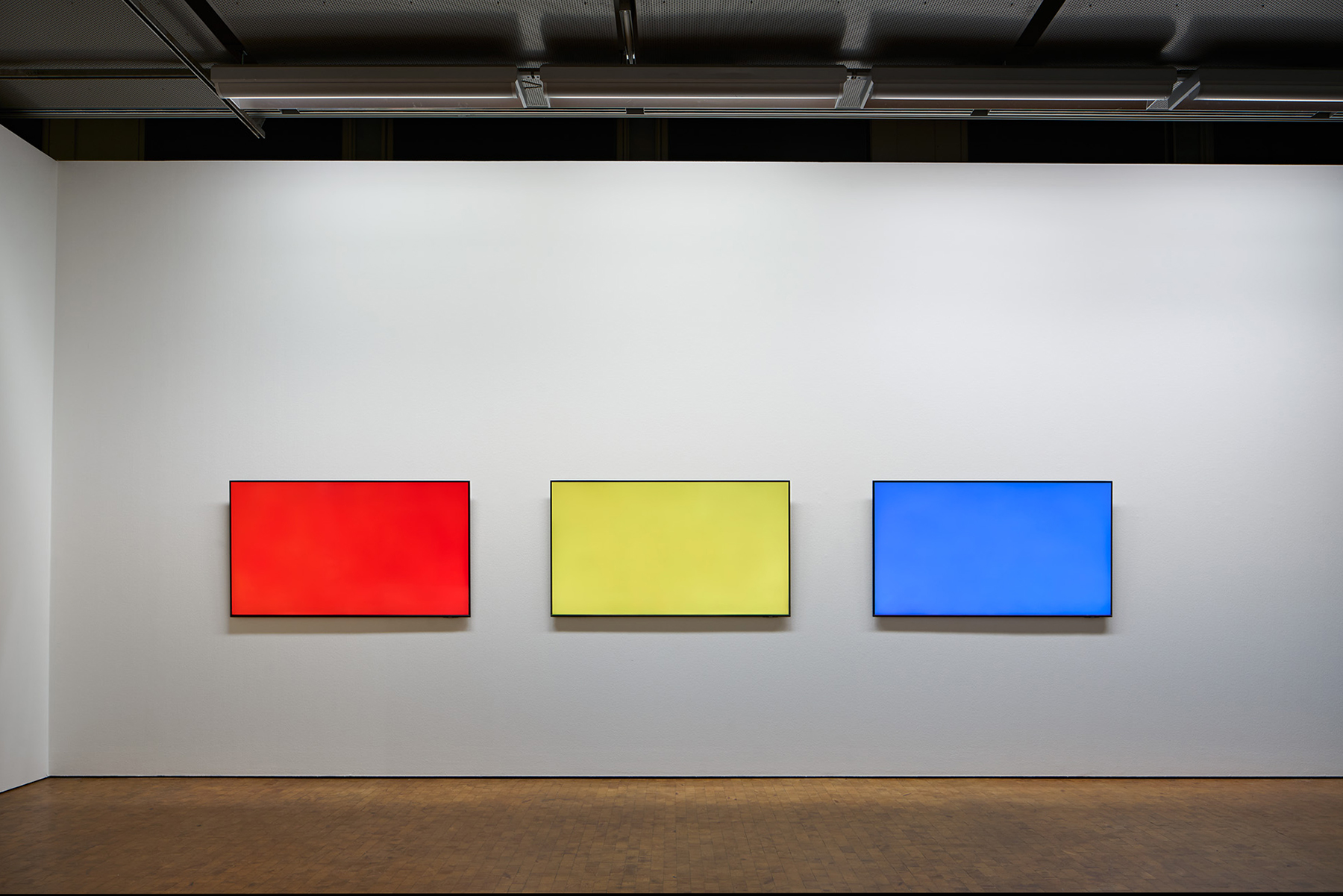
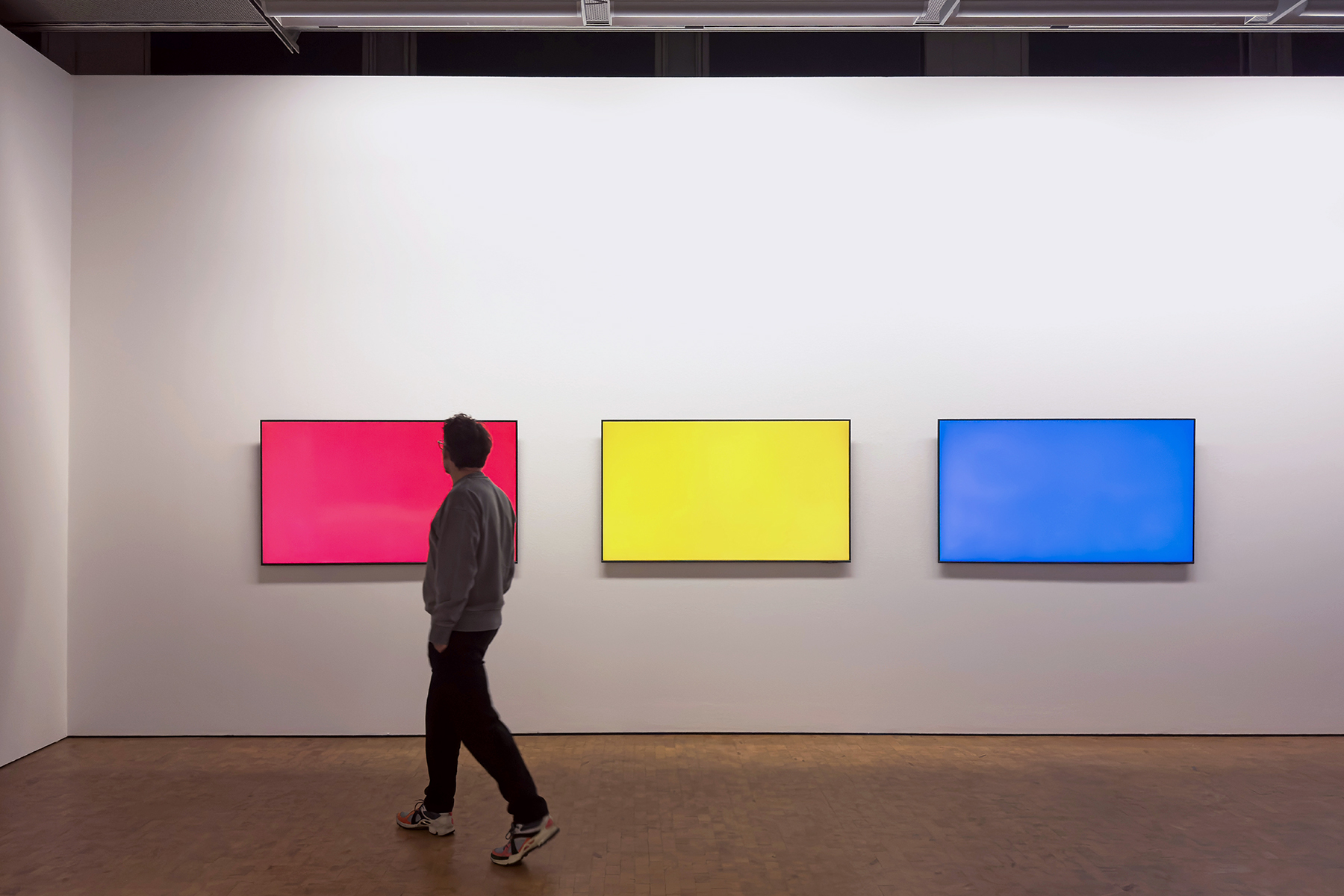
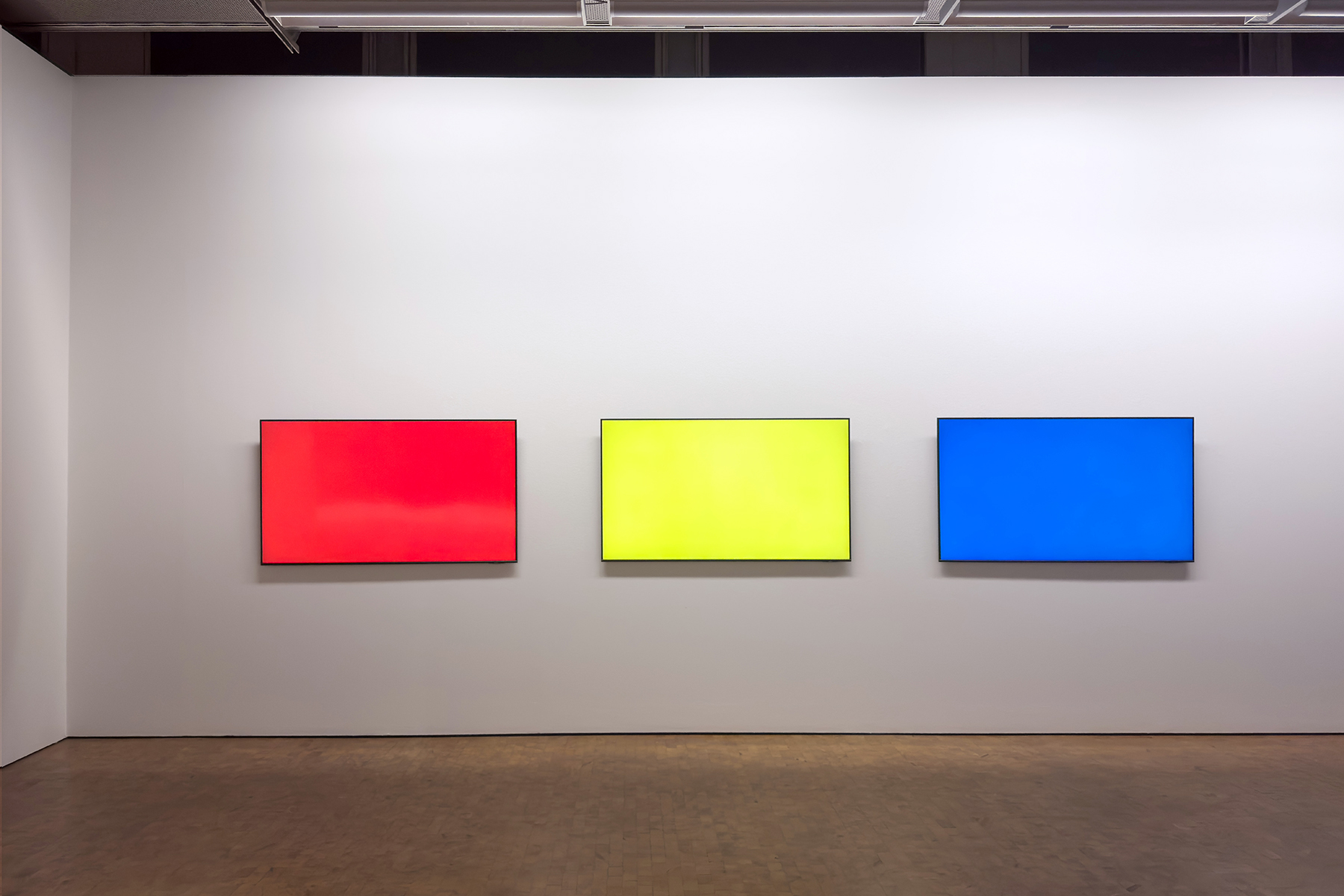
The video work consists of three monitors showing different tones of the three primary colors. The tones of those colors are taken from the national flags of the world according to the themes that they represent in the national flags. These are; blood & war (reds), desert & the sun (yellows), sky & sea (blues).

Installation view; Kunstmuseum Karlsruhe
photos: Özlem Günyol & Mustafa Kunt

cover photo: Stephan Baumann

The Distance

The Distance (Kuşadası-Samos), 2017

fine art print on Hahnemühle photo rag ultra smooth 305 gr/m²
102.2×102.2 cm

A square, blue-colored piece of paper made of 922 vertical and 922 horizontal lines, each 92.2 cm long. The total length of the lines demonstrates the closest distance between Kuşadası (Turkey) and Samos Island (Greece). In the work, the paper has a grid spacing of 1 mm intervals, like those commonly used in graph papers. Therefore, although the lines that create the work demonstrates a specific distance, it also appears as an empty piece of paper awaiting to be filled before the viewers. The title “the distance” also emphasizes the distance of the artists’ reality to the reality of the “situation” itself, that is, the freedom of travel through the migration routes without having any troubles. That is to say, the distance, even the same distance, is not the same distance when it comes to going through it.

photos 1,2: Işık Kaya

Fireworks

Fireworks, 2015-ongoing

digital video, loop

The video highlights the ironical transformation of the use of fireworks, which are normally associated with celebrations and an aesthetic experience. The fireworks in the video are no longer exploding in vertical direction but in horizontal direction and what is there to see is not the beauty of these explosions but protection shields that emerge instantaneously where these explosions take place.

Installation view; Dirimart, Istanbul
photos: Işık Kaya

Video installation at Dirimart, video: Işık Kaya

Right

Right, 2015

fine art print on Hahnemühle photo rag ultra smooth 305 g/m² 41.2×60 cm

All instances of the word “right” graphically overlap, as it is used in the Constitution (36 times in total). As a result, the work pushes the rest of the Constitution to the background and concentrates on the foundational function of a constitution, which is to secure the basic rights and freedom of all individuals.

photos: Işık Kaya

The Portrait

The Portrait, 2015

fine art print on Hahnemühle photo rag ultra smooth 305 g/m²
120×144 cm

The Portrait addresses the wealth inequality, highlighted by the slogan “We are the 99 percent,” by focusing on the other side of the equation.
The work brings together, in a single photographic print, the faces of the 100 wealthiest individuals listed in Forbes magazine’s World’s Billionaires list for 2015. The composite image—created by printing these 100 photographs on top of one another using the draft mode of an inkjet printer—forms an anonymous figure. The ghostly traces of all these faces merge into one, resembling an identikit in a biometric photo format.
Only when viewed from a certain distance does the photograph reveal a human figure, evoking the distance between those who constitute the portrait and the rest of society—the 99 percent.

Installation view; Dirimart, Istanbul
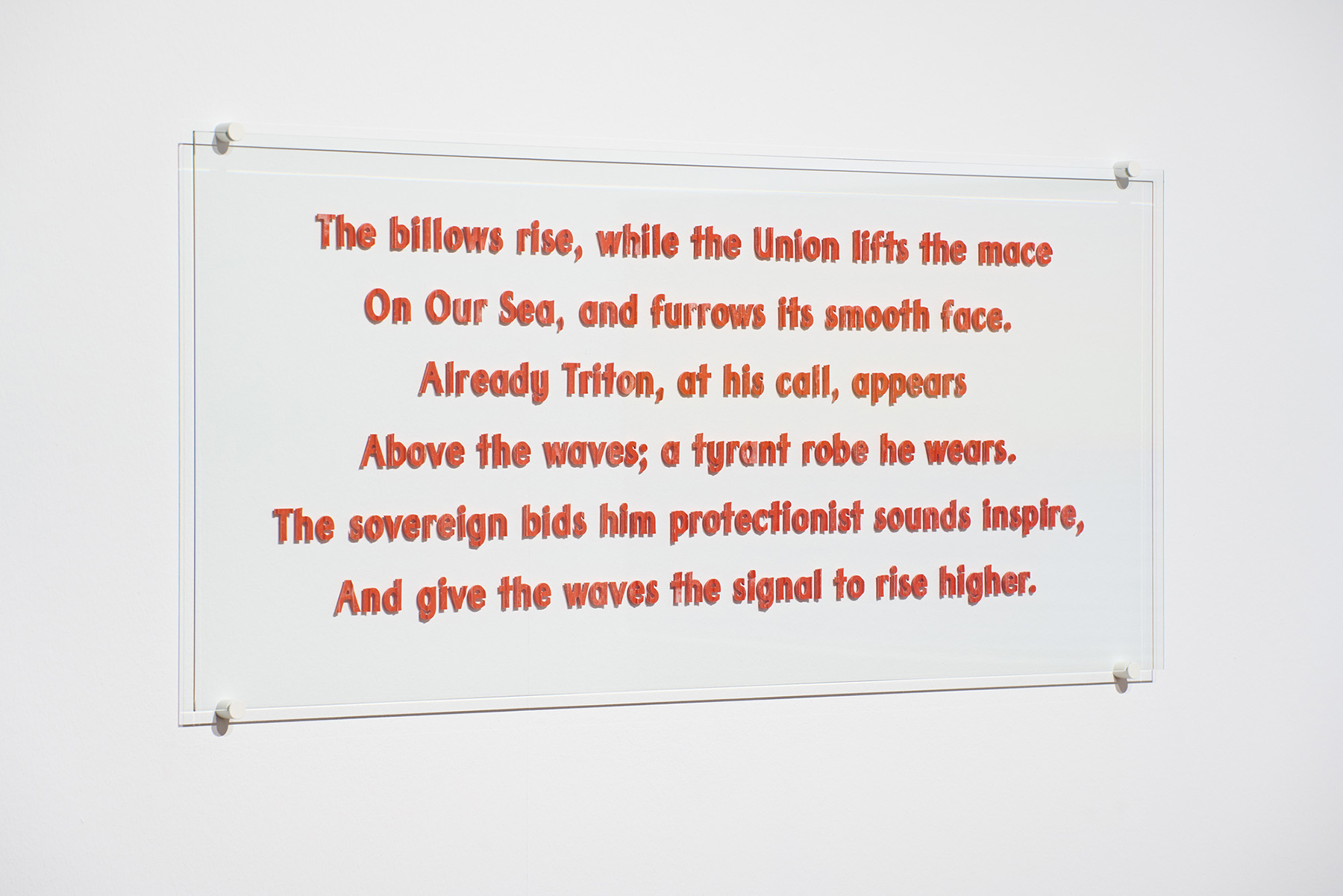
photo 1: Işık Kaya